Introduction
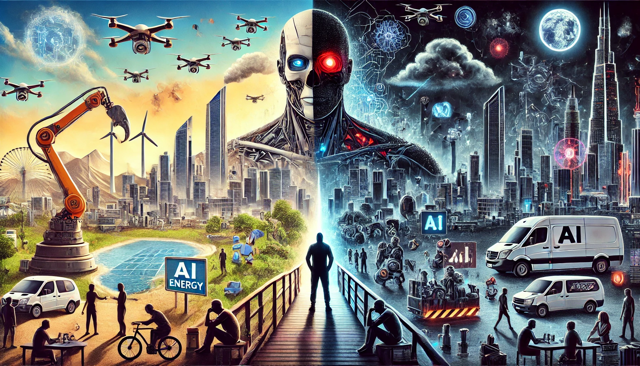
As humans, there are certain truths we’ve long held about human life. We believe that life is finite and organic and follows the natural laws of biology. The latest technological advancements are challenging some of those truths, and they seem to be on the verge of being radically transformed. There are chances that in the near future, life will not only be created in the warmth of a woman’s womb but also entirely within a laboratory. Advances in technologies like in-vitro gametogenesis (IVG) and artificial wombs are pushing like never before the boundaries of what’s possible, offering new paths to parenthood while simultaneously raising profound ethical questions. These breakthroughs, propelled by artificial intelligence (AI), are both exhilarating and unsettling, promising to reshape humanity in ways we have yet to comprehend.
The Dawn of In-Vitro Gametogenesis (IVG)
IVG is a revolutionary technology that allows scientists to create sperm and egg cells from ordinary body cells, like skin cells. Pioneered by Nobel laureate Shinya Yamanaka, this process involves reprogramming mature cells back into a pluripotent state—essentially turning back the clock so they can develop into any cell type.
Professor Insoo Hyun, director of research ethics at Harvard Medical School, recalls his first encounter with IVG: He said that when he first heard about the possibility of turning skin cells into sperm or egg cells, he thought it was something far off in the future. But today, he is surprised at how quickly we’ve arrived at this point. However, when understanding the nature of AI, this should be surprising.
Potential Benefits
Here are a few remarkable benefits IVG could offer:
- Expanded Reproductive Options: IVG could enable infertile couples to have biologically related children. Same-sex couples might conceive a child genetically related to both partners without the need for donors.
- Extending Fertility Windows: Older individuals could potentially have children without the age-related decline in fertility, redefining the biological clock.
- Single-Parent Genetics: It’s conceivable that one person could provide both sperm and egg, leading to a child genetically related to only one parent.
Risks and Ethical Challenges
However, alongside these benefits come significant risks:
- Social and Emotional Impact on Children: Children born through IVG may grapple with questions about their identity and origins. Especially since studies have shown that understanding one’s lineage is a fundamental aspect of personal identity. Disruptions in traditional parentage could lead to emotional and psychological challenges for these children.”
- Redefining Parenthood: What does it mean to be a parent when traditional biological roles are upended? The social fabric of family structures might be strained or redefined entirely.
- Consent and Misuse: Without strict regulations, there’s a risk of creating gametes from someone’s cells without their consent, leading to unauthorized reproduction.
- Genetic Diversity Concerns: Reduced genetic diversity could have unforeseen consequences on human health.
- Accessibility and Inequality: Such technologies might only be available to the wealthy, exacerbating social inequalities.
Artificial Wombs: Nurturing Life Outside the Body
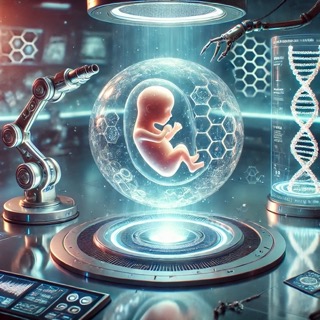
Artificial wombs, or ectogenesis, involve growing embryos outside the human body. Initially developed to help premature infants survive, researchers are exploring the possibility of supporting full-term development in a lab setting.
Experts like Dr. Emily Partridge, a researcher working on artificial womb technology, emphasize that their goal is to recreate the maternal womb environment so that babies born too early can continue to develop and thrive.”
How Artificial Wombs Are Made
Artificial wombs are sophisticated devices designed to mimic the conditions inside a human uterus. They typically involve a fluid-filled container that provides nutrients and oxygen to the developing fetus through an artificial placenta. Sensors and AI systems constantly monitor the fetus’s vital signs, adjusting conditions to ensure optimal growth.
Potential Benefits
Here are some of the significant advantages:
- Saving Premature Infants: Could drastically improve survival rates and health outcomes for preterm babies.
- Alternative for Those Unable to Carry a Pregnancy: Women with health issues preventing pregnancy could have biological children without surrogacy.
- Advancement in Research: Provides opportunities to study early human development in ways previously not possible.
Risks and Ethical Challenges
But these benefits come with serious considerations:
- Impact on Mother-Child Bonding: The psychological effects of gestation outside the womb are unknown. A study published in the National Library of Medicine found that mother-to-infant bonding is a process that starts during pregnancy and continues postnatally. So, the prenatal bonding process is vital. Removing it could affect the emotional connection between the child and its future parent.
- Legal and Social Implications: Questions about the legal status of a fetus in an artificial womb and parental rights need addressing. Who is the legal guardian during gestation?
- Moral Considerations: Some argue it could lead to a devaluation of pregnancy and motherhood.
A Future Reimagined: Excitement and Unease
The possibilities are astounding. Infertility could become a challenge of the past. Traditional family structures might expand in ways we can’t yet imagine. However, as Professor Hyun notes, “Technologies like this hit upon a very common refrain: once we gain the ability to do something radical, it creates a lot of uncertainty.”
The convergence of IVG and artificial wombs could one day allow for babies to be developed entirely in a lab. This scenario raises profound questions:
- Eugenics and Genetic Manipulation: With complete control over reproduction, there’s potential for selecting traits to create so-called “perfect” babies. This harks back to dark chapters in history where eugenics sought to engineer desired human characteristics, leading to discrimination and human rights violations.
- Commodification of Life: The risk of turning baby-making into an industry where children are designed, ordered, and produced could fundamentally alter our perception of human life.
- Playing God: Many grapple with the moral implications of such control over creation. Philosophical and religious perspectives question whether humans should wield such power, fearing unforeseen consequences.
The Duality of AI: Accelerator of Progress and Amplifier of Risks
Artificial intelligence is the driving force behind these rapid advancements. AI’s ability to process vast amounts of data and predict complex biological processes has accelerated research beyond what many thought possible.
However, this rapid progress is a double-edged sword. The exponential growth of AI means that breakthroughs are occurring simultaneously across various fields, often outpacing ethical guidelines and societal readiness. In the next few years, we might witness even more unbelievable innovations that could further alter the fabric of humanity. Yoshua Bengio, a Turing Award-winning AI researcher, signed an open letter calling for a pause on training AI systems more powerful than GPT-4, citing “profound risks to society and humanity.”
Proceeding with Caution: The Need for Collective Dialogue
This is why it’s more important than ever for everyone to join the conversation about what it means to be human. These technologies don’t just affect scientists or those directly involved—they have the potential to impact all of humanity.
Recommendations:
- Robust Ethical Frameworks: Establish international guidelines that keep pace with technological advancements, involving ethicists, scientists, policymakers, and diverse communities.
- Public Engagement: Encourage open dialogues to understand societal values and concerns, ensuring that developments align with public interest.
- Regulatory Oversight: Governments and international bodies should monitor research and applications, preventing misuse and ensuring equitable access.
- Interdisciplinary Collaboration: Foster cooperation between technologists, ethicists, sociologists, and healthcare professionals to anticipate implications holistically.
- Slow Down and Reflect: As exciting as progress is, taking the time to assess the impacts can prevent unintended consequences. Rushing risks transforming humanity in unpredictable ways.
Conclusion
We stand on the brink of a future where the boundaries of life are being redrawn. AI-powered IVG and artificial wombs offer incredible opportunities to alleviate suffering and expand human potential. Yet, they also challenge our fundamental understanding of what it means to be human.
The duality of these technologies—holding both promise and peril—requires us to proceed with both excitement and caution. As Dr. Alan Flake, a leading researcher in artificial wombs, wisely advises, “I’ve learned in my work never to say never. However, we must carefully consider the implications of bringing such profound changes into reality.”
Join the Conversation
This is why platforms like ours exist—to foster dialogue and reflection on these critical issues. We invite you to be part of this important conversation. Share your thoughts on what it means to be human in an age of rapid technological advancement. Are we ready for the changes these technologies will bring? Your insights are invaluable in shaping a future that respects our humanity while embracing innovation.
Subscribe to stay informed, comment below, or email us if this article resonates with you. Together, we can navigate the complexities of progress and ensure that we move forward thoughtfully and ethically.