Introduction
I am going to paint a picture to you and I want you to try to envision it. Imagine a world where infertility is a relic of the past, where organs can be replicated digitally to tailor medical treatments perfectly, and where you could have a conversation with a digital version of yourself or a loved one who has passed away. These scenarios may sound like science fiction, but advances in Artificial Intelligence (AI) and Biotechnology are bringing them closer to reality. While these breakthroughs hold incredible promises, they also raise profound ethical questions. Let’s delve into the benefits and risks of these emerging technologies, understand how AI makes them possible, and discuss the steps we need to take to navigate this brave new world responsibly.
1. In-Vitro Gametogenesis (IVG): Redefining Reproduction
IVG is a revolutionary technology that enables the creation of sperm and egg cells from any cell in the body. This technology could transform reproductive options but also raises ethical questions about consent, identity, and the nature of parenthood.
Benefits:
- Expanded Paths to Parenthood: IVG could enable infertile couples, same-sex couples, and single individuals to have biological children. For example, a woman who doesn’t produce viable eggs could use her skin cells to create them.
- Elimination of Age Barriers: Older individuals might have the opportunity to conceive using their own genetic material, extending the biological clock.
Risks:
- Ethical Dilemmas: Dr. Eli Adashi, a professor of medical science at Brown University, notes, “IVG challenges our traditional understanding of parenthood and reproduction, raising questions about the societal and moral implications.”
- Consent and Misuse: There is a risk that someone’s cells could be used without their consent to create gametes, leading to unauthorized reproduction.
AI’s Role:
AI accelerates the research by analyzing complex biological data to understand how cells can be reprogrammed into gametes. Machine learning algorithms can predict the outcomes of cellular transformations, making the process more efficient and feasible.
2. Artificial Womb Technology: Nurturing Life Outside the Body
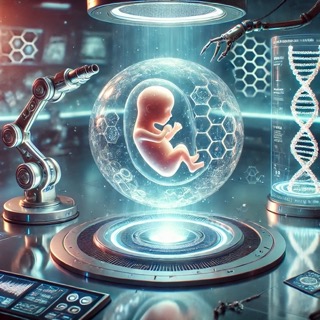
Artificial wombs are devices that could support the growth of embryos and fetuses outside the human body, providing a safe environment for premature babies to develop fully.
Benefits:
- Saving Premature Infants: Artificial wombs could provide a safe environment for premature babies to develop fully, increasing their chances of survival.
- Alternative to Traditional Pregnancy: This technology could offer options for those who cannot carry a pregnancy due to medical reasons.
Risks:
- Impact on Mother-Child Bonding: Psychologist Dr. Susan Smith warns, “Gestation outside the womb might affect the natural bonding process between mother and child, with unknown psychological effects.”
- Ethical and Legal Questions: Determining parental rights and the legal status of a fetus in an artificial womb presents uncharted territory.
AI’s Role:
AI systems monitor and adjust the conditions within artificial wombs, ensuring optimal development by analyzing data in real-time and making necessary adjustments.
3. Virtual Twins in Healthcare: Personalized Medicine at Its Best
Virtual twins are digital replicas of an individual’s body created using AI and medical data, allowing doctors to simulate treatments and predict how a patient might respond.
Benefits:
- Tailored Treatments: Virtual replicas of patients can simulate how they might respond to different treatments, leading to personalized and more effective healthcare.
- Risk Reduction: Surgeons can practice complex procedures on a digital twin before operating, reducing the likelihood of complications.
Risks:
- Data Privacy: Storing detailed personal health data increases the risk of breaches. Cybersecurity expert Jane Nguyen cautions, “Protecting patient data must be a priority to prevent misuse.”
- Accessibility: Advanced technologies may widen the gap between those who can afford them and those who cannot.
AI’s Role:
AI algorithms process vast amounts of medical data to create accurate virtual models. They can simulate scenarios and predict outcomes that would be impossible for humans to compute manually.
4. Digital Immortality: Avatars That Live On
Digital immortality involves creating AI-powered avatars that mimic a person’s personality and knowledge, enabling interactions even after they have passed away.
Benefits:
- Preserving Legacy: Digital avatars can keep the memories and wisdom of loved ones accessible. For instance, a grandchild could interact with an AI representation of their grandparent to learn family history.
- Emotional Comfort: For some, interacting with a digital version of a deceased loved one may provide solace.
Risks:
- Psychological Impact: Grief counselor Dr. Alan Thompson notes, “Relying on digital avatars may complicate the grieving process and prevent closure.”
- Authenticity and Consent: There’s a risk that the avatar may not accurately represent the individual’s true personality or wishes, especially if created without explicit consent.
AI’s Role:
Natural language processing and machine learning enable AI to analyze speech patterns, writings, and social media activity to create a digital persona that mimics the individual.
5. AI in Decision-Making Roles: Enhancing or Replacing Human Judgment
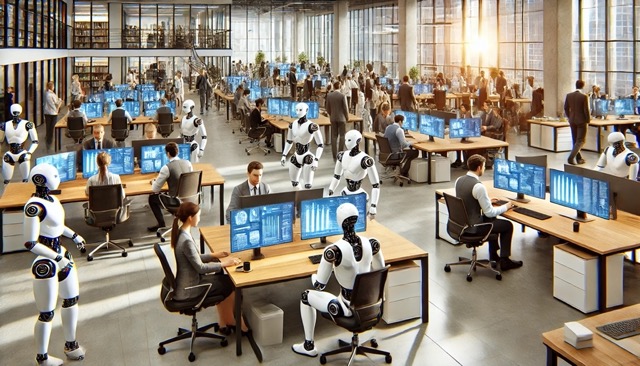
AI systems are increasingly used to analyze data and make decisions in areas like healthcare, finance, and law, potentially improving accuracy and efficiency.
Benefits:
- Improved Accuracy: AI can process and analyze data faster and more accurately than humans in areas like diagnostics and treatment planning.
- Efficiency: Automating routine tasks allows professionals to focus on more complex issues that require human insight.
Risks:
- Loss of Human Touch: Over-reliance on AI may reduce personal interactions essential in fields like healthcare and education.
- Bias and Fairness: AI systems trained on biased data can perpetuate inequalities. Timnit Gebru, an AI ethics researcher, emphasizes, “We must ensure AI systems are transparent and equitable to avoid reinforcing societal biases.”
AI’s Role:
AI serves as both a tool and a decision-maker, using algorithms to analyze data and make recommendations or decisions based on that analysis.
The Path Forward: Balancing Innovation and Ethics
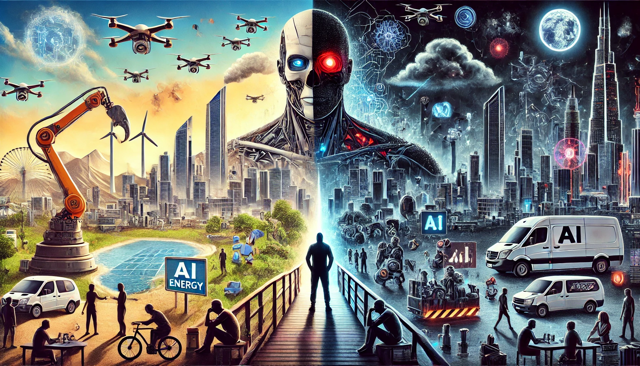
As AI evolves, these revolutionary practices may become commonplace, fundamentally altering aspects of human life. It’s crucial to address the ethical concerns proactively to avoid unintended consequences.
Potential Solutions:
- Robust Ethical Frameworks: Establish international guidelines for the ethical use of AI and biotechnology, involving ethicists, technologists, policymakers, and the public.
- Informed Consent and Autonomy: Ensure individuals have control over how their biological and personal data are used, with clear consent mechanisms.
- Transparency in AI Systems: Develop AI with explainable algorithms so that decisions can be understood and audited.
- Equitable Access: Implement policies to prevent disparities in access to advanced technologies, promoting inclusivity.
- Continuous Oversight: Create regulatory bodies to monitor the development and application of these technologies, adapting to changes swiftly.
As tech leaders push the boundaries of what’s possible, their commitment to ethical responsibility, ensuring that technology serves humanity’s best interests must also deepen as well. As Dr. Fei-Fei Li, a leading AI scientist, once said “Technology could benefit or hurt people, so the usage of tech is the responsibility of humanity as a whole, not just the discoverer. I am a person before I’m an AI technologist.”
Conclusion
The convergence of AI and biotechnology offers unprecedented opportunities to enhance human life. From redefining reproduction to personalizing medicine and preserving legacies, the potential benefits are immense. However, these advancements come with significant risks that we must thoughtfully navigate. By fostering open dialogue, implementing ethical safeguards, and prioritizing humanity’s well-being, we can embrace innovation without losing sight of the values that make us human.
As we stand on the brink of a future filled with possibilities, the choices we make today will shape the world for generations to come. It’s an exciting journey, and with careful stewardship, we can unlock the full potential of these technologies while safeguarding our shared humanity.
Call to Action
Let’s engage in conversations about these emerging technologies, educate ourselves, and participate in shaping policies that will govern their use. Together, we can ensure that the future we build is one where technology enhances our lives without compromising our ethical foundations.
In the upcoming articles we will delve deeper in each of these topics.
If you found this blog post interesting, drop a like and follow for more similar content. Thanks!